

A Sneak Peek Inside the Complete Step-By-Step Guide
Starting a personal training business in 2026 looks very different than it did just a few years ago.
Clients are no longer looking for just workouts. They want structure, accountability, flexibility, and support that fits into their real lives. At the same time, technology has made it easier than ever for trainers to build professional, scalable businesses without being tied to the gym floor 40 hours a week.
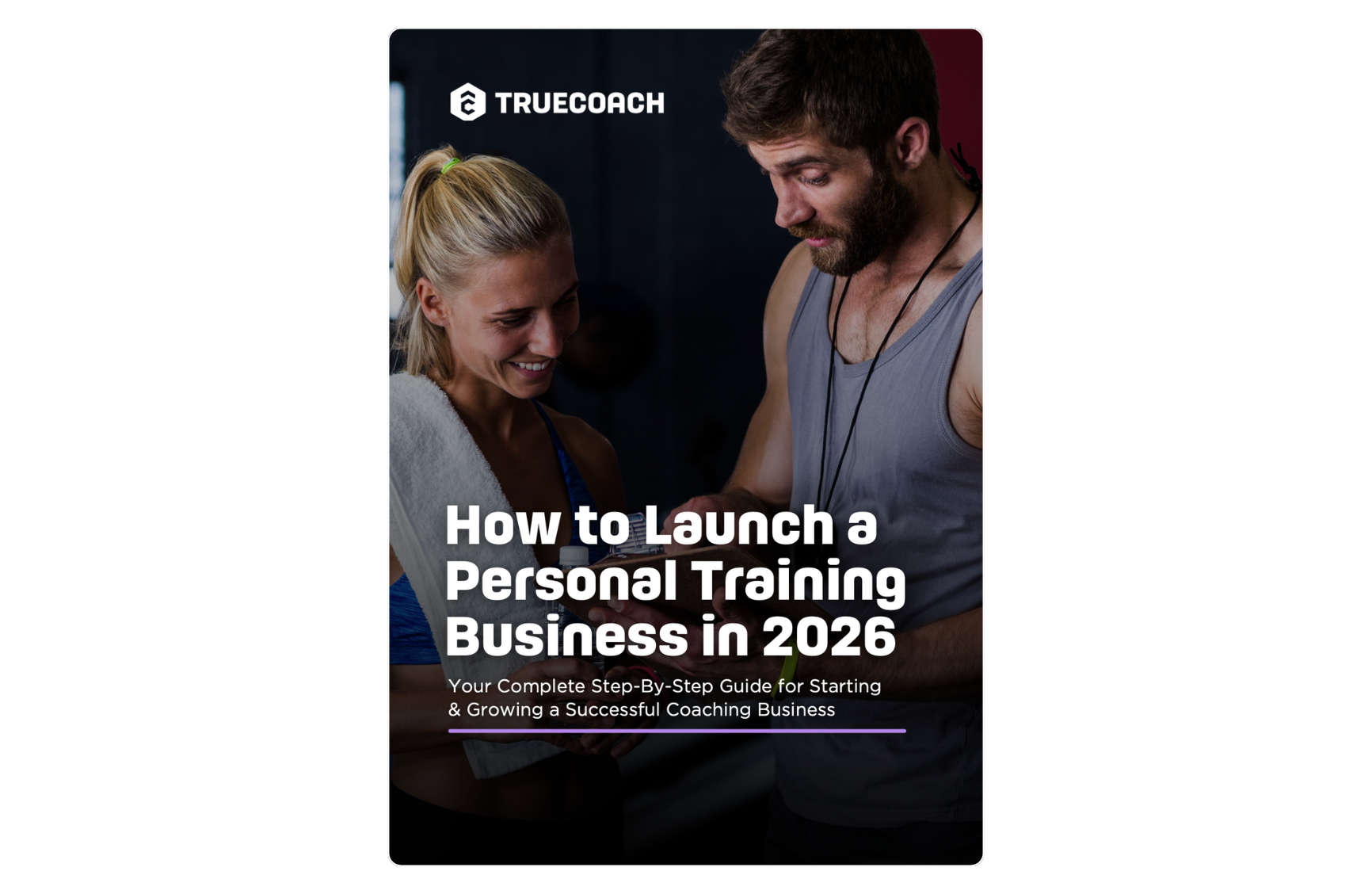
That’s exactly why we created the How to Launch a Personal Training Business in 2026 Guide.
It’s a step-by-step roadmap for building a modern coaching business that works online, in person, or as a hybrid. And in this blog, we’re giving you a sneak peek at what’s inside so you can see how all the pieces fit together.
If you’re ready for the full playbook, you can download the complete guide at any point. But for now, let’s walk through the highlights.

Why 2026 Is a Smart Time to Start a Coaching Business
The fitness industry is still growing, but the way people buy coaching has changed.
Clients expect more than one-hour sessions. They want ongoing communication, progress tracking, habit support, and a coach who understands their lifestyle. This shift has opened the door for trainers who are willing to think beyond traditional models.
The full guide starts by breaking down how the industry has evolved and why trainers who adapt early have a massive advantage. Instead of guessing your way through it, you get a clear framework for building a business that aligns with how clients actually want to be coached in 2026.
Want the full roadmap? Download the How to Launch a Personal Training Business in 2026 Guide.
Build a Strong Business Foundation
One of the biggest mistakes trainers make is jumping straight into content, programs, or social media without clarity.
Before you worry about marketing, you need to know three things:
- How you want to coach
- Who you want to coach
- What kind of business you’re actually building
The traditional one-hour session model no longer fits most trainers’ goals or clients’ needs. Today, there are three primary ways to structure a coaching business.
In-person coaching is best for hands-on instruction and local communities but is limited by time and location.
Online coaching offers flexibility and scalability, with lower overhead and the ability to serve clients anywhere.
Hybrid coaching combines in-person sessions with online support and has become one of the most sustainable and profitable options for many trainers.
Your coaching model should align with your lifestyle, income goals, and the level of flexibility you want in your schedule.
Define a Clear Niche
Generalists struggle in a crowded market. Specialization creates clarity. When potential clients immediately understand who you help and what result you deliver, trust builds faster.
A clear niche is not about excluding people. It is about focusing your message so the right clients recognize themselves in it. This makes your marketing more effective and simplifies your content, offers, and onboarding.
This blog is just a preview. The full guide includes positioning exercises and prompts that help you dial this in quickly and confidently.
Creating Offers and Pricing That Make Sense
Another major roadblock for new trainers is pricing.
Too many coaches either underprice themselves or create overly complicated service menus that confuse clients. In 2026, the strongest coaching businesses keep things simple.
Build a Small Set of Core Offers
You do not need an extensive menu. Most successful coaches operate with two or three core services. This typically includes a primary monthly coaching program, a higher-touch premium option, and a short-term or one-time offer.
Clear packages remove confusion for clients and make it easier for them to decide. They also help you systemize your delivery and scale more effectively.
Price for Outcomes, Not Hours
In 2026, clients invest in results, not time blocks. Coaching that includes accountability, habits, nutrition guidance, and ongoing communication carries higher perceived value than sessions alone.
Pricing should reflect the transformation you provide and the level of support included.
In the full guide, you’ll learn how to structure:
- A flagship monthly coaching offer
- A premium coaching option
- A one-time or short-term program
The full guide goes deeper into how to package coaching, habits, nutrition, and accountability into offers that feel valuable and easy to say yes to. You’ll also see realistic pricing ranges for online, hybrid, and premium coaching based on what clients are actually paying today.
Download now to see how to structure and price your offers with confidence.
TrueCoach plays a key role here by allowing coaches to run subscriptions, sell one-time programs, and automate payments all in one place. Learn more.
Systems That Save Time and Increase Retention
A personal training business isn’t just about getting clients. It’s about keeping them.
Retention is driven by systems. When clients know what to expect, how progress is tracked, and how communication works, they stay longer and get better results.
The guide walks through how to set up:
- A simple, modern tech stack
- A professional onboarding experience
- Weekly and monthly coaching workflows
Instead of juggling multiple tools, the goal is to consolidate wherever possible. Platforms like TrueCoach allow you to deliver workouts, track progress, manage habits and nutrition, communicate with clients, and handle payments all in one place. Learn more.
This blog only scratches the surface. The full guide includes onboarding checklists and workflow examples you can adapt immediately.
Grab the guide to build systems that work for you, not against you.
Branding and Online Presence Without Overcomplicating It
Your brand is not your logo. It is how people perceive your expertise and value. In 2026, your online presence often acts as your first impression. Most potential clients will check your social profiles before ever reaching out.
Focus on Clarity Over Aesthetics
A professional presence does not require a complex website or polished design. What matters is that visitors quickly understand who you help, what you offer, and what to do next.
Social platforms now function as search engines for fitness consumers. A clear bio, simple call to action, and a few strong pieces of content can be enough to start generating interest.
Use Content With Purpose
Content should educate, build trust, and demonstrate your process. Most trainers benefit from defining a few content pillars such as education, proof, authority, connection, and offers.
The full guide walks you through how to:
- Define your brand in a simple, practical way
- Write a bio that clearly communicates who you help and how
- Create a minimum viable online presence that drives inquiries
Download the full guide to simplify your branding and online presence.
A Simple Launch Plan That Actually Works
Launching your business doesn’t require ads, complicated funnels, or a massive following.
A simple launch approach focuses on communicating problems you solve, explaining how your coaching works, and clearly inviting people to take the next step. Short launch windows create urgency and help you focus your messaging.
Many trainers overthink this stage. In reality, clear communication and genuine connection outperform complicated strategies.
The full guide provides a full two-week launch plan that helps you activate your audience and start conversations.
You’ll learn how to:
- Build awareness before opening spots
- Communicate your offer clearly
- Create urgency without feeling pushy
Want the full launch plan? Download the guide.
Scaling Without Burning Out
Once you land your first clients, the next challenge is growth.
As your roster fills up, time becomes your most valuable resource. The guide explains how to automate and systemize early so your business stays manageable as it grows.
You’ll explore:
- What to automate first
- How to reduce admin work
- Common next revenue streams like group coaching or digital programs
TrueCoach was built specifically to support this stage of growth by centralizing the backend of your business and integrating with automation tools like Zapier. Learn more.
Download the guide to learn how to scale sustainably in 2026.

Your Next Step Starts Here
If there’s one thing to take away from this sneak peek, it’s this: launching a personal training business doesn’t have to feel overwhelming.
Clarity creates momentum. Systems create freedom. Consistency builds trust. And growth comes from structure, not hustle.
The How to Launch a Personal Training Business in 2026 Guide gives you the full step-by-step plan to build a business that’s professional, scalable, and aligned with how clients want to be coached today.
If you’re ready to stop guessing and start building, download the full guide and take the next step toward launching with confidence.
And when you’re ready to put it all into action, start your 14-day free trial of TrueCoach and run your entire coaching business from one place.
Your business is waiting. Now is the time to build it.
Sign-Up for Our Newsletter