

Most personal trainers spend months trying to generate more leads before they have built something clear enough to convert them. They post consistently, answer DMs, hop on consult calls, and create solid content that gets engagement. But when someone finally asks, “So what exactly do I get?” the explanation feels scattered. The result is hesitation. Not because the coach is unqualified, but because the offer itself is vague.
When your service is not clearly defined, prospects struggle to understand the transformation, the structure, and the value. Sales conversations become harder than they need to be. The truth is, most coaching does not fail because of poor marketing. It struggles because the offer lacks clarity. When you tighten the offer, everything else starts to work better.

Step 1: Start With the Outcome, Not the Workouts
One of the biggest mistakes new coaches make is building their offer around what they do instead of what the client gets.
Clients are not buying:
- Workout PDFs
- Exercise libraries
- Check-ins
- Programming expertise
They are buying a result.
Your offer should be anchored around a specific, measurable outcome. That means choosing one clear problem and one clear transformation.
Examples:
- Lose 10 to 15 pounds in 12 weeks without extreme dieting
- Build muscle while staying injury free
- Get strong after pregnancy
- Improve endurance for your first half marathon
When your offer centers on a defined outcome, everything else becomes easier. Your messaging becomes sharper. Your pricing feels more justified. Your sales conversations become simpler.
Ask yourself:
- Who is this for?
- What specific problem are they struggling with?
- What result can I confidently help them achieve?
Write it in one sentence.
If you cannot clearly describe the outcome in one sentence, your offer is not ready.
Once you define the outcome, delivery becomes about tracking progress toward that result. This is where having a professional system matters. Platforms like TrueCoach make it simple to track workouts, habits, check-ins, and progress metrics so clients can see tangible movement toward their goal instead of guessing.
Clarity builds trust. Measurable progress builds retention.
Step 2: Package the Experience, Not Just the Program
Saying “custom workouts and weekly check-ins” is not an offer. It is a feature list.
An offer is a structured experience.
Instead of listing what you provide, define the full container:
- How long does the program last?
- How often do clients hear from you?
- What level of access do they have?
- How is progress tracked?
- What happens after they join?
For your first offer, simplicity wins. Choose a defined timeframe. Eight, twelve, or sixteen weeks works well because it gives clients a clear beginning and end.
Then define the support structure. For example:
- Weekly program updates
- Weekly check-in with feedback
- Messaging access Monday through Friday
- Habit tracking for accountability
When these details are clearly defined, prospects feel confident. When they are vague, prospects hesitate.
A structured experience also protects your time. Without boundaries, beginner coaches often overdeliver and burn out.
Using a coaching platform like TrueCoach helps reinforce that structure. You can organize client programs, automate recurring workouts, manage communication in one place, and maintain clear boundaries around support. The result is a professional experience that feels polished rather than pieced together through spreadsheets and scattered apps. Learn more.
Remember, clients do not want chaos. They want clarity.
Step 3: Price Based on Value, Not Fear
Pricing is one of the most emotional parts of building your first personal training offer.
New coaches often default to hourly thinking. They ask, “What should I charge per session?” instead of asking, “What is this transformation worth?”
If you are selling a twelve week transformation that includes programming, accountability, habit tracking, and coaching feedback, you are not selling hours. You are selling a result.
When pricing your first offer, consider:
- The depth of support
- The timeframe
- The complexity of the transformation
- The level of accountability included
A simple pricing structure for beginners can look like:
- Entry level program with structured workouts and limited check-ins
- Core coaching offer with weekly feedback and accountability
- Premium option with higher touch support
The key is consistency and confidence. Underpricing because you feel insecure only creates resentment later.
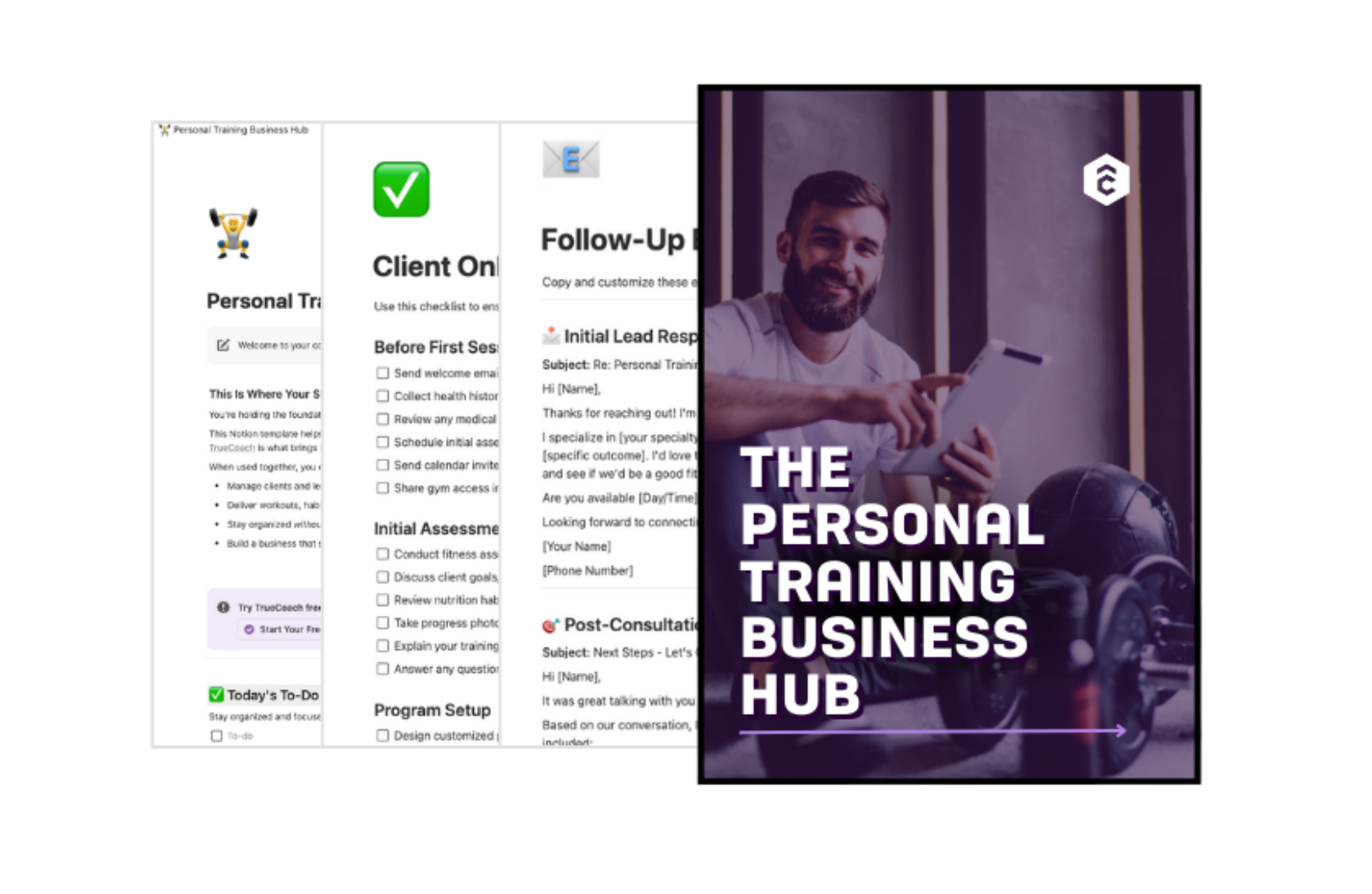
You can also use tools like the Personal Training Business Hub to reverse engineer your income goals. Mapping out how many clients you need at a certain price point gives you clarity instead of guesswork.
Pricing feels easier when your offer is clearly defined. Vague offers force you to justify your value. Clear offers justify themselves.
Step 4: Make It Easy to Say Yes
Even a strong offer can fail if the buying process feels confusing.
When someone is interested, your job is to remove friction.
Your offer should clearly answer:
- Who is this for?
- What result will I achieve?
- How long does it take?
- What support is included?
- What do I do next?
If prospects have to ask for basic details, they feel uncertain. Uncertainty slows decisions.
Your onboarding process should also feel seamless. Once someone pays, they should immediately feel taken care of. That means:
- Clear welcome message
- Clear next steps
- Clear timeline
- Clear communication expectations
A professional delivery system reinforces trust from day one. Using TrueCoach allows you to onboard clients into one centralized dashboard where they can access their workouts, track habits, log nutrition, and communicate with you. When everything lives in one place, clients feel supported rather than overwhelmed. Learn more.
Simplicity is a competitive advantage.
Step 5: Build the Delivery System Before You Scale
Many coaches focus on marketing before building infrastructure.
They think more leads will fix their revenue problem. In reality, scaling a weak offer just amplifies the issue.
Before trying to grow, make sure:
- Your offer is clearly defined
- Your pricing is sustainable
- Your onboarding is streamlined
- Your client experience is consistent
A strong delivery system improves retention. Retention improves revenue. Revenue gives you room to grow.
When your programs, communication, and tracking systems are organized inside a platform like TrueCoach, you free up mental bandwidth. That energy can then go toward content creation and client acquisition rather than constant administrative tasks.
A clear offer paired with structured delivery creates momentum.
Step 6: Avoid These Common Mistakes
As you build your first personal training offer, watch out for these traps:
Trying to serve everyone
If your offer works for everyone, it resonates with no one. Specificity sells.
Overcustomizing everything
You do not need to reinvent every program from scratch. Build systems and frameworks that allow for personalization without chaos.
Selling sessions instead of results
People care about outcomes. Anchor your messaging around transformation.
Underpricing out of insecurity
Confidence comes from clarity. Clear structure supports stronger pricing.
Having no central system
Managing clients across email, DMs, spreadsheets, and random apps leads to missed check-ins and inconsistent experiences.
Organization is not just about convenience. It communicates professionalism.
Step 7: Test, Refine, and Improve
Your first offer does not need to be perfect. It needs to be clear.
Launch it. Deliver it. Collect feedback.
Pay attention to:
- Client engagement
- Check-in consistency
- Retention rates
- Client results
Use that data to refine.
Inside TrueCoach, you can monitor compliance, track habits, review progress data, and see how engaged clients are with their programming. That feedback loop helps you improve your offer based on behavior instead of assumptions. Learn more.
Every strong coaching business evolves through iteration.

Final Thoughts
You do not need a massive audience to sell coaching.
You do not need fancy funnels or complicated marketing systems.
You need:
- One clear transformation
- One structured experience
- One reliable system to deliver it well
When your offer is specific and your delivery is organized, selling feels aligned instead of forced. Prospects understand what they are buying. Clients understand what they are committing to. You understand how to consistently deliver value.
That is how you build your first personal training offer that actually sells.
If you are ready to deliver your offer with structure and professionalism, explore how TrueCoach can help you streamline programming, track progress, and manage clients in one place. Start you 14-day free trial today!
And if you want additional clarity around pricing, lead tracking, and revenue goals, download the Personal Training Business Hub and map out the business side of your offer with confidence.
Clarity converts. Structure retains. Systems scale.
Sign-Up for Our Newsletter