

Every coach has experienced it.
A client shows up to every workout, puts in great effort during sessions, and talks about how committed they are to their goals. Then the rest of the week tells a different story. Meals are inconsistent, sleep suffers, stress levels rise, workouts get skipped, and progress starts to slow.
When results stall, many coaches immediately look at the program. Should the exercises change? Do calories need adjusting? Is it time for a new training split?
In reality, the issue is often much simpler.
Most clients don’t struggle because their workout plan is ineffective. They struggle because maintaining healthy behaviors outside of training sessions is difficult. The habits that happen during the other 23 hours of the day have a far greater impact on long-term success than any individual workout.
This is why one of the most valuable skills a coach can develop is helping clients stay consistent between coaching interactions.
The best coaches don’t simply deliver workouts. They create accountability, build systems, provide support, and help clients execute the behaviors that lead to lasting results.

Why Client Consistency Coaching Is the Real Driver of Results
Before coaches can improve client consistency, they need to understand what actually drives outcomes.
A one-hour workout represents less than 1% of a client’s week. While training is important, it is only one piece of the puzzle. The choices clients make every day ultimately determine whether they reach their goals.
Small behaviors repeated consistently over time create meaningful change.
That might include:
- Hitting protein goals most days of the week
- Taking daily walks
- Staying hydrated
- Prioritizing sleep
- Managing stress effectively
- Following through on planned workouts
The challenge is that most clients already know what they should be doing. The issue is not a lack of information. It’s the ability to consistently apply that information in the middle of busy schedules, family obligations, work responsibilities, and everyday life.
This is why coaching should focus less on perfection and more on adherence.
A client who follows a sustainable plan 80% of the time for a year will almost always outperform someone who follows a perfect plan for a few weeks before burning out.
The true goal of coaching outside the gym is helping clients build behaviors they can maintain long after the initial excitement wears off.
Stop Coaching Workouts and Start Coaching Behaviors
Many coaches spend the majority of their time modifying exercises, adjusting sets and reps, and refining programming details.
While those things matter, they are rarely the primary reason clients succeed or fail.
Successful coaches spend just as much time coaching behaviors as they do coaching workouts.
This means regularly discussing topics such as:
- Meal planning
- Recovery habits
- Sleep routines
- Daily movement
- Stress management
- Time management
- Environment design
These conversations help uncover the real obstacles preventing progress.
Instead of simply asking whether a client completed their workouts, consider questions like:
- How was your energy this week?
- What made nutrition difficult?
- What got in the way of your routine?
- What worked particularly well?
- What challenges are coming up next week?
These questions provide valuable context that workout data alone cannot reveal.
For example, a client who misses workouts may not need a new program. They may need help navigating a busy work schedule or creating a more realistic training plan.
This is where full-service coaching creates significant value.
Rather than focusing solely on exercise delivery, coaches can use tools like habit tracking and nutrition coaching within TrueCoach to monitor the daily behaviors that influence client outcomes alongside training performance.
Create Accountability That Goes Beyond Weekly Check-Ins
Many coaches rely heavily on weekly check-ins to assess progress and provide feedback.
While weekly reviews are important, accountability should not exist only once every seven days.
The most effective personal trainer accountability systems create ongoing awareness and engagement throughout the week.
Daily Habit Tracking
Simple habits often drive the biggest results.
Tracking behaviors such as protein intake, water consumption, sleep, daily steps, or recovery practices helps clients stay focused on actions they can control.
Even the act of checking off a habit creates awareness that reinforces consistency.
Weekly Reflection Questions
Reflection encourages ownership.
Ask clients to identify:
- Their biggest win
- Their biggest challenge
- One thing they want to improve next week
These conversations help clients recognize patterns and create opportunities for coaching interventions.
Progress Photos and Measurements
The scale does not always tell the full story.
Regular progress photos, measurements, strength improvements, and performance markers help clients see progress that might otherwise go unnoticed.
Celebrate Small Wins
Many coaches wait until major milestones to acknowledge success.
Instead, celebrate behaviors.
Recognize consistency, effort, improved habits, and positive decision-making. These small wins build confidence and increase adherence over time.
Accountability is not about policing clients. It is about creating a system that helps them stay aware, engaged, and supported.
Tools such as habit tracking, progress metrics, and client dashboards within TrueCoach can help coaches build structured accountability systems without creating unnecessary administrative work.
Communicate More Than You Think You Need To
Many clients need encouragement long before they need program adjustments.
One of the simplest ways to improve consistency is increasing meaningful communication.
When clients feel connected to their coach, they are more likely to stay engaged during difficult periods.
Communication does not have to be lengthy or complicated.
A quick message can have a significant impact:
- Checking in mid-week
- Celebrating a small win
- Offering encouragement
- Providing clarity around a challenge
- Helping a client get back on track after a setback
Consider a client who misses two workouts.
Many coaches would wait until the next scheduled check-in to address the issue.
A better approach is to reach out immediately.
A simple message asking what happened and offering support can prevent a temporary setback from becoming a complete disengagement.
These small touchpoints build trust and reinforce accountability.
Features like in-app messaging and Voice Notes within TrueCoach make it easy to create personal coaching interactions without dramatically increasing workload, allowing coaches to maintain stronger client relationships at scale.
Use Data to Coach More Effectively
One of the biggest challenges in online coaching accountability is understanding what happens between workouts.
Without visibility into daily behaviors, coaches are often forced to make assumptions.
This is where habit coaching data becomes incredibly valuable.
By tracking key metrics, coaches can identify trends before they become problems.
Areas worth monitoring include:
- Habit completion rates
- Nutrition adherence
- Training compliance
- Daily activity levels
- Recovery markers
- Sleep quality
When viewed together, these metrics provide a more complete picture of client behavior.
For example:
- Sleep quality declines and recovery suffers
- Daily step counts decrease and weight loss stalls
- Nutrition adherence drops and energy levels fall
- Stress increases and workout performance declines
Rather than reacting after progress stalls, coaches can proactively address issues as they emerge.
TrueCoach supports this approach through metrics tracking, advanced habit tracking, nutrition coaching tools, and integrations with popular wearable devices.
By connecting platforms such as Apple Watch, WHOOP, Fitbit, Garmin, Oura, and Google Fit, through TrueCoach Wearables integration, coaches gain deeper insight into client behaviors and recovery patterns, helping them make more informed coaching decisions.
Build Systems That Make Client Adherence Easier
Many clients fail because their environment makes success difficult.
Willpower alone is rarely enough.
The most successful clients have systems that make healthy behaviors easier to follow.
A coach’s role is often less about motivation and more about problem-solving.
This might involve helping clients:
- Schedule workouts ahead of time
- Prepare meals before busy weeks
- Create backup plans when schedules change
- Remove common obstacles
- Set realistic expectations
For example, a client who frequently misses workouts during work travel may not need more motivation. They may need a simplified travel workout plan and a strategy for maintaining consistency on the road.
The goal is to create systems that reduce decision-making and support long-term adherence.
When programming, habits, nutrition, communication, and progress tracking all exist in one place, it becomes easier for both coaches and clients to stay organized and consistent.
This is one reason many coaches choose to centralize their client experience within TrueCoach, creating a streamlined environment that supports accountability and execution.
The Best Coaches Stay Involved Between Workouts
The fitness industry continues to evolve.
Clients are no longer looking solely for workout programs. They are looking for guidance, accountability, support, and expertise that helps them navigate everyday challenges.
The most successful coaches understand this shift.
They stay involved between workouts by:
- Monitoring habits
- Reviewing client data
- Providing encouragement
- Adjusting plans proactively
- Celebrating progress
- Helping clients overcome obstacles
This is the foundation of full-service coaching.
The value of a coach is no longer simply creating workouts, it’s in helping clients consistently execute the behaviors that produce results.
When coaches focus on implementation rather than information, client outcomes improve, retention increases, and coaching relationships become stronger.

Coaching Happens Between Workouts
Consistency is the foundation of long-term success. While workouts play an important role, the behaviors clients repeat every day ultimately determine their results. Nutrition, recovery, sleep, movement, stress management, and accountability all influence progress far more than any individual training session.
The coaches who create the biggest impact understand that coaching happens between workouts.
They build accountability systems, communicate consistently, monitor behaviors, and help clients stay engaged when motivation fades.
As the industry continues to move toward wellness and full-service coaching, the ability to guide clients outside the gym will become one of the most valuable skills a coach can develop.
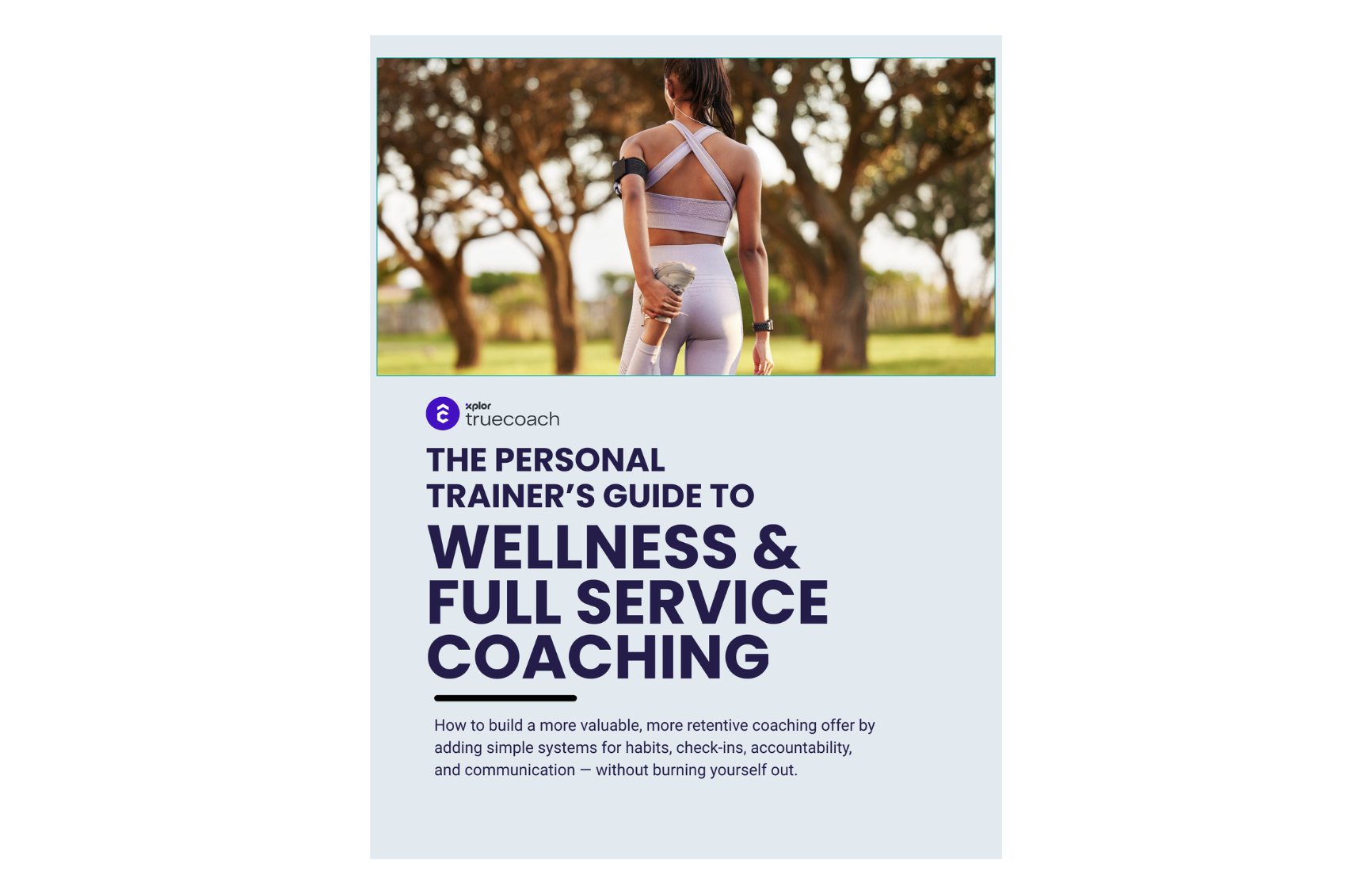
If you’re looking to expand your coaching approach, download the Wellness Coaching & Full-Service Coaching Guide to learn how leading coaches are creating better client experiences and delivering more comprehensive support.
And if you’re ready to streamline accountability, communication, habit tracking, nutrition coaching, and client management in one place, start your free trial of TrueCoach and discover how connected coaching can improve both client results and business growth.
Sign-Up for Our Newsletter