

The fitness industry is evolving quickly, and client expectations are changing with it.
Not long ago, most coaching revolved around delivering workout programs and helping clients improve performance inside the gym. While effective programming still matters, today’s clients are looking for far more than workouts alone. They want accountability, guidance, communication, and support that fits into their everyday lives.
More clients are now looking for coaches who can help them improve nutrition habits, stay consistent, manage stress, recover properly, and build healthier routines overall. In many ways, the industry is shifting away from simple fitness coaching and toward full-service lifestyle coaching.
For coaches, this shift creates a major opportunity.
Those who expand beyond workouts are often seeing stronger retention, better client results, increased perceived value, and more recurring revenue. Coaches who continue delivering only programs may find it harder to stand out in an increasingly competitive online coaching space.
The good news is this shift does not require reinventing your business overnight. In many cases, it starts with small changes that make coaching feel more connected, personalized, and supportive.

Why Traditional Fitness Coaching Is No Longer Enough
Most coaches already know workouts are only one part of the transformation process.
The reality is that many clients are not struggling because they lack access to workout information. Online fitness coaching trends and free fitness content is everywhere. Clients can find endless training programs online within seconds. What they often struggle with is consistency outside the gym.
Things like:
- Maintaining healthy habits
- Staying accountable
- Managing stress
- Improving nutrition
- Prioritizing recovery
- Following through long term
That is where coaching beyond workouts becomes valuable.
Clients are increasingly paying for structure and client accountability coaching rather than just exercise selection. They want someone who can help them stay on track when motivation drops, life gets busy, or progress slows down.
This is why lifestyle coaching is becoming such an important differentiator. Coaches who help clients improve their daily routines and behaviors often create far more meaningful long-term results.
Many coaches are now building these conversations directly into their process through weekly check-ins, habit tracking, and client communication systems using online coaching business platforms like TrueCoach. Instead of only assigning workouts, they are creating a more connected coaching experience that supports clients throughout the week.
What Lifestyle Coaching Actually Looks Like
When people hear the phrase “lifestyle coaching,” it can sound overly complicated. In reality, it often comes down to helping clients improve the habits and behaviors that influence their success outside of workouts.
That might include helping clients:
- Stay consistent with nutrition
- Improve sleep habits
- Manage stress
- Build sustainable routines
- Improve recovery
- Stay accountable between sessions
Lifestyle coaching for personal trainers is less about being perfect and more about helping clients make realistic progress they can maintain long term.
For example, instead of only asking whether a client completed their workouts that week, a coach may also ask how their energy levels felt, whether stress impacted recovery, or how consistent they were with nutrition habits.
Those conversations often reveal the real barriers holding clients back.
This is where modern coaching tools have become incredibly valuable. Features like habit tracking, progress metrics, and client messaging allow coaches to keep these conversations organized and actionable without creating overwhelming manual work.
The result is a premium coaching service that feels more personalized and supportive for clients.
Why Clients Are Looking for More Support Than Ever
Client expectations have changed dramatically over the last few years.
Today’s clients are more aware of the connection between fitness, recovery, stress, sleep, nutrition, and overall wellness. Wearable technology has also accelerated this shift. Devices like Apple Watch, WHOOP, Fitbit, and Oura Ring have made people far more aware of recovery scores, sleep quality, heart rate trends, and daily activity levels.
As a result, clients are starting to think more holistically about their health, and they increasingly expect their coaches to do the same.
They no longer want coaching that only exists during workouts. They want support that fits into their lifestyle as a whole.
This is especially true in online coaching, where clients often expect:
- Faster communication
- More accountability
- Personalized guidance
- Long-term support
- Better organization
- Sustainable transformation
Coaches who can provide this level of support are putting themselves in a much stronger position moving forward.
Many are also utilizing tools like Wearables Integrations to incorporate recovery and wellness data directly into their coaching process. Instead of relying only on workouts completed, coaches can better understand how clients are recovering, sleeping, and managing overall stress.
That creates a much more complete coaching experience.
The Business Benefits of Lifestyle Coaching
One of the biggest advantages of holistic fitness coaching is that it naturally increases the perceived value of coaching services.
When coaching only revolves around workouts, it can become easier for clients to compare options based purely on price. But when clients feel supported across multiple areas of their health and lifestyle, coaching becomes far more personalized and difficult to replace.
That often leads to stronger retention, more referrals, and better long-term revenue opportunities.
Many coaches are now building premium offers around:
- Accountability systems
- Nutrition support
- Weekly check-ins
- Recovery guidance
- Habit coaching
- Ongoing communication
These additions help coaching feel more complete without necessarily requiring coaches to work significantly more hours.
In many cases, the key is simply having better systems in place.
Using centralized coaching tools makes habit coaching for personal trainers easy. With workouts, progress tracking, habits, communication, and client insights organized in one place. This makes it much easier to scale a more premium coaching experience while maintaining consistency across clients.
The result is a business that feels less transactional and far more relationship-driven.
How Coaches Can Start Making the Shift
The transition into lifestyle coaching does not need to happen all at once.
For many coaches, the shift starts by simply paying more attention to what happens outside the workout itself.
That could mean introducing weekly check-ins, tracking a few simple habits, or having more conversations around recovery, nutrition, and stress management. Even small adjustments can dramatically improve accountability and client adherence.
Many coaches also find that adding structure to communication helps clients feel more supported without increasing workload. Organized messaging systems, progress tracking, and habit coaching tools help streamline the process while improving the overall client experience.
For example, coaches using Programs & Workout Builder can continue delivering high-quality training programs while layering in habit tracking, nutrition support, and wellness accountability through the same platform.
This creates a smoother experience for both the coach and the client.
The goal is not to overwhelm clients with more information. The goal is to help them stay more consistent with the behaviors that drive long-term results.
Technology Is Making Full-Service Coaching Easier
One reason lifestyle coaching is growing so quickly is because coaching technology has evolved alongside client expectations.
Modern nutrition and fitness coaching platforms allow coaches to manage far more than workouts alone. Instead of juggling spreadsheets, messaging apps, habit trackers, and separate nutrition tools, coaches can now centralize the entire client experience.
With TrueCoach, coaches can combine programming, communication, habit tracking, progress tracking, and wearable integrations into one streamlined system. That makes it easier to deliver a more complete coaching experience without creating unnecessary complexity.
This is especially important for online and hybrid coaches who want to scale while still maintaining a personalized feel.
The coaches who embrace these systems early are often able to create stronger client experiences while freeing up more time to focus on growth.

The Future of Coaching Is More Holistic
The fitness industry is moving toward a more complete and personalized style of coaching.
Clients no longer want workouts alone. They want guidance, accountability, communication, and support that helps them improve their overall lifestyle. Coaches who adapt to this shift have an opportunity to create stronger client relationships, improve retention, increase revenue, and deliver better long-term results.
The future of coaching is not about replacing workouts. It is about building a more supportive system around them.
The coaches who understand this shift now will likely be the ones leading the industry moving forward.
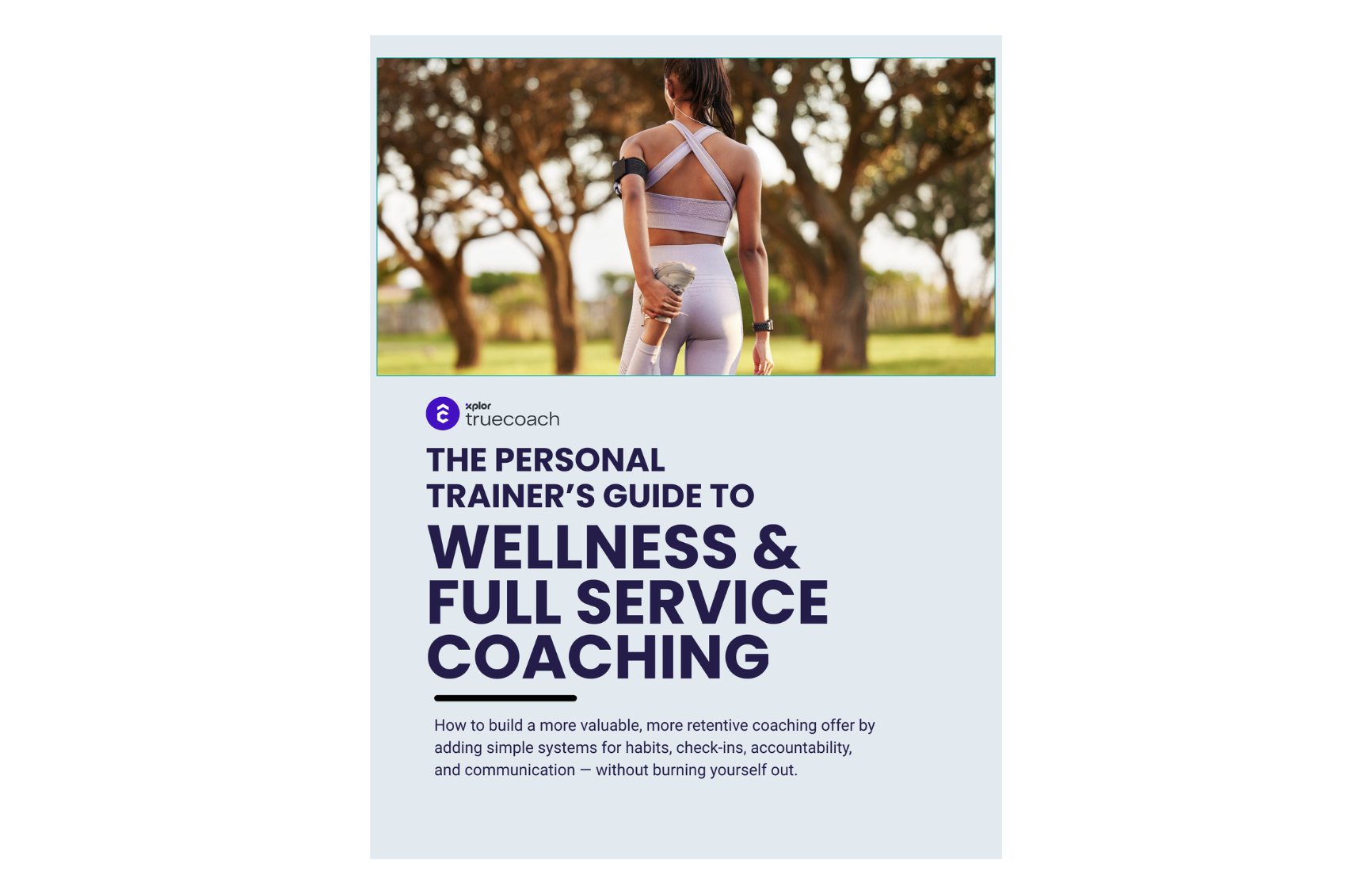
If you want to learn how to build a more holistic coaching business, download The Wellness Coaching & Full-Service Coaching Guide and explore how TrueCoach can help you deliver a more complete coaching experience both inside and outside the gym.
Sign-Up for Our Newsletter