

Most personal training businesses don’t start with a detailed business plan, sophisticated software, or perfectly mapped processes. They start with a client.
Then another client comes through a referral. Someone reaches out on Instagram. A friend asks for a program. Before long, what started as a personal training side hustle has real momentum—and the potential to become something bigger.
That growth is exciting, but it can also expose the limits of the systems you started with. Spreadsheets get harder to manage. Client messages are scattered across different apps. Payments require more follow-up. Programming and check-ins start consuming more of your week.
If your goal is to be a full time personal trainer, time management and clear systems are the foundation of your success. The good news? You don’t need complicated processes. You need simple, repeatable systems that can grow with you.

The Difference Between Having Clients and Building a Business
Having clients means delivering a service. Building a business means creating a reliable way to deliver that service consistently.
As your roster grows, you’re managing more than workouts. You’re responsible for communication, payments, programming, progress, retention, and the overall client experience.
You don’t need complicated processes to handle it all. You need systems you can repeat.
Foundation 1: Define What You’re Actually Selling
Before you systemize your fitness business management, get clear on your offer.
Define:
- Who you help
- What your coaching includes
- How programs are delivered
- How often clients receive support
- Where communication happens
- What clients pay and how billing works
The clearer your offer is, the easier everything else becomes to organize. Clients also know exactly what they’re paying for and what they can expect from you.
Foundation 2: Create a Repeatable Client Journey
What happens after someone says, “I’m ready to start”?
A simple client journey might look like:
Sign Up → Onboarding → Assessment → Programming → Weekly Coaching → Progress Review → Renewal
Each client doesn’t need a completely different operational experience.
You can standardize onboarding, assessments, check-ins, and reviews while keeping the coaching itself personalized. Consistency behind the scenes gives you more time to focus on the work that actually requires your expertise.
Foundation 3: Get Your Client Information Organized
One of the earliest signs that a side hustle is becoming difficult to manage is information being spread everywhere.
Workouts live in a spreadsheet. Assessments are in Google Drive. Payments happen through another app. Progress photos arrive by text. Questions show up in your DMs.
As you grow, create a central place for important client information, including goals, assessments, programs, progress, coaching notes, communication, habits, and nutrition information.
The goal is simple: when you need something about a client, you should know exactly where to find it.
Platforms like TrueCoach can help bring programming, communication, progress tracking, habits, nutrition, and other coaching workflows into one place, giving you a more organized foundation as your roster grows.
Foundation 4: Standardize What You Repeat
Pay attention to the tasks you do for nearly every client:
- Onboarding
- Programming
- Check-ins
- Progress reviews
- Reminders
- Billing
- Renewals
If you recreate these processes every time, your workload grows alongside your client roster.
A useful rule is:
If you do it for every client, build a system for it.
Create onboarding checklists, reusable workout templates, consistent check-in processes, and communication templates.
The goal isn’t to automate the human side of coaching. It’s to reduce repetitive administrative work so you have more time for the parts of coaching that require you.
Foundation 5: Establish Professional Communication
When coaching starts as a side hustle, communication often happens wherever it’s convenient: texts, emails, Instagram DMs, WhatsApp, or all of the above.
Eventually, that gets difficult to manage.
Choose a primary communication channel and establish clear expectations around response times, check-ins, and where coaching conversations should happen.
Structure doesn’t make your coaching less personal. It creates a better experience because clients know what to expect—and important conversations are less likely to get lost.
Foundation 6: Make Payments Predictable
A sustainable coaching business needs predictable revenue.
If you’re manually requesting payments or reminding clients to send money each month, billing quickly becomes another administrative burden.
Establish clear pricing, billing schedules, recurring payments, payment policies, and renewal processes.
Predictable billing means less time chasing payments and better visibility into how much recurring revenue your business generates.
Foundation 7: Start Tracking Your Business
How is your coaching business actually performing?
You don’t need dozens of KPIs. Start with a few useful numbers:
- Active clients
- Monthly revenue
- New clients
- Cancellations
- Retention
- Client engagement
Tracking these metrics helps you understand your business beyond simply knowing how busy you feel.
For example, you may be adding new clients every month but losing them just as quickly. Or your roster might be growing without revenue keeping pace.
Knowing your numbers gives you a stronger foundation for decisions about pricing, marketing, retention, and growth.
Choose Tools That Can Grow With You
There’s nothing wrong with starting with spreadsheets, texts, payment apps, calendars, and Google Drive. They’re accessible and can work well with a small roster.
The question is whether they’ll still work when your business grows.
Imagine your current workflow with twice as many clients. Would you simply have twice as many spreadsheets, messages, reminders, and manual updates?
If so, your tools may eventually become a constraint.
Online software like TrueCoach is a centralized way to manage personal trainer productivity. Your programming, communication, progress, habits, nutrition, payments, and other workflows al live in one place. Explore all TrueCoach features.
Instead of choosing tools only for the business you have today, consider whether they can support the business you want to build.
You Don’t Need to Build Everything at Once
Creating better systems doesn’t need to become another overwhelming project.
Start with the area causing the most friction.
Week 1: Map your client journey.
Week 2: Standardize onboarding.
Week 3: Centralize client management.
Week 4: Create reusable programming and communication templates.
Then keep improving from there.
The goal isn’t perfection. It’s creating a stronger foundation one process at a time.
Build for the Business You Want to Run
A coach with five clients may not need sophisticated systems. But a coach who wants 25, 50, or more should think about how those clients will eventually be managed.
Ask yourself:
Could the way I work today support the business I want tomorrow?
The best time to build systems isn’t when you’re already overwhelmed. It’s while you still have the capacity to improve how your business operates.
Turning a coaching side hustle into a sustainable business isn’t only about signing more clients. It’s about building a business capable of serving those clients consistently without adding unnecessary administrative work every time you grow.
Ready to Move From Spreadsheet to System?
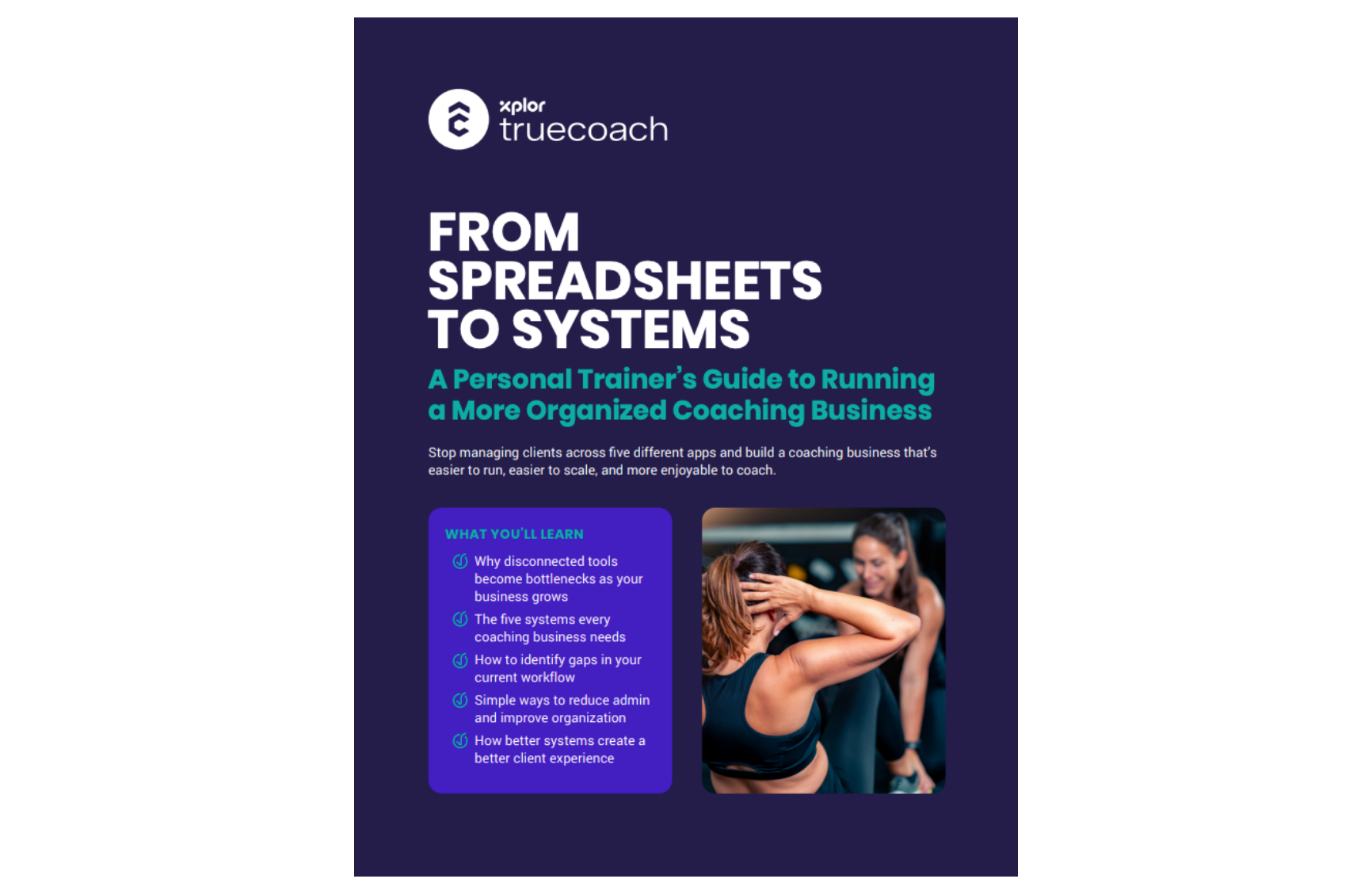
Download From Spreadsheets to Systems: A Personal Trainer’s Guide to Running a More Organized Coaching Business for a practical framework to audit your current setup, create better processes, and build a coaching business that’s ready to grow.
When you’re ready to bring those systems together, start a free TrueCoach trial and see how a platform built specifically for coaches can help you manage your business as it grows.
Sign-Up for Our Newsletter