
For years, online coaching has been built on written communication. Written check-ins, written workout feedback, written encouragement, you get it.
It works. But as client expectations continue to rise in 2026, many coaches are realizing something important: Text alone doesn’t always capture tone, clarity, or connection. And worse, it leaves things wildly up to interpretation.
That’s why more online and hybrid personal trainers are starting to integrate voice messaging directly into their coaching workflows. Not as a replacement for text, but as an upgrade.
Why Voice Messaging Works So Well in Coaching
Voice notes aren’t about adding more communication. They’re about improving the quality and efficiency of the communication you’re already doing. Here’s why they work.
1. They’re Faster Than Typing
Think about how long it takes to write a thoughtful check-in response. Five minutes? Maybe more if you’re being detailed.
Now imagine speaking that same message clearly in 45 seconds.
Voice notes allow you to respond naturally and efficiently without sacrificing depth. For coaches managing 20, 40, or 80 clients, that time adds up quickly over the course of a week.
2. Clients Hear Your Tone
Tone matters. Encouragement feels different when someone hears it. Accountability feels clearer when your inflection supports it. Nuance, empathy, and belief come through more naturally in voice than in text. That subtle shift can dramatically improve client engagement and retention.
3. They Reduce Miscommunication
Long written messages can sometimes create confusion.
Voice allows you to:
- Clarify programming changes
- Explain reasoning behind adjustments
- Reinforce expectations
- Set tone during plateaus
Often, a 60-second voice note eliminates the need for multiple follow-up messages.
Real-World Use Cases for Voice Notes in Online Coaching
Voice messaging works best when it’s integrated intentionally into your weekly workflow.
Here are some of the most practical applications.
Weekly Check-In Responses
Instead of typing a full recap, record a structured voice message:
- Acknowledge wins
- Address one adjustment
- Set one focus for the week ahead
Example structure:
“Great consistency this week. Your training intensity is exactly where it needs to be. Let’s increase protein slightly and keep steps consistent next week.”
Clear. Supportive. Actionable.
Technique Feedback on Logged Workouts
When reviewing workout notes or videos, voice notes allow you to give quick, precise coaching cues:
“Your squat depth looked strong this week. Let’s focus on pushing your knees slightly out of the bottom to stay more stable.”
It feels personal and direct, without requiring long written explanations.
Motivation During Plateaus
Plateaus are often emotional moments.
A short voice message saying:
“I know progress feels slow right now, but your consistency has been excellent. This phase is about staying patient.”
can carry far more impact than a paragraph of text.
Quick Feedback Between Formal Check-Ins
You don’t always need to wait for a structured check-in to communicate.
Voice notes are perfect for:
- Acknowledging a big lift
- Reinforcing compliance
- Nudging effort
- Celebrating small wins
Short and intentional is key.
How to Use Voice Notes Effectively
Voice messaging works best when it’s simple and structured. Here are a few guidelines to make your your message hits home.
Keep It Concise
Aim for 30–90 seconds. If it goes beyond two minutes, consider whether it should be a call or a written plan.
Follow a Light Framework
Before recording, think:
- Acknowledge
- Reinforce
- Adjust
- Action step
This keeps your communication focused and professional.
Make It Action-Oriented
Encouragement is important, but clarity drives progress.
Instead of:
“Keep pushing.”
Try:
“Let’s aim for 130g protein daily and increase steps to 8,000 next week.”
Voice should move clients forward.
How Voice Notes Fit Seamlessly Inside TrueCoach
Voice messaging is most effective when it lives inside your existing coaching system.
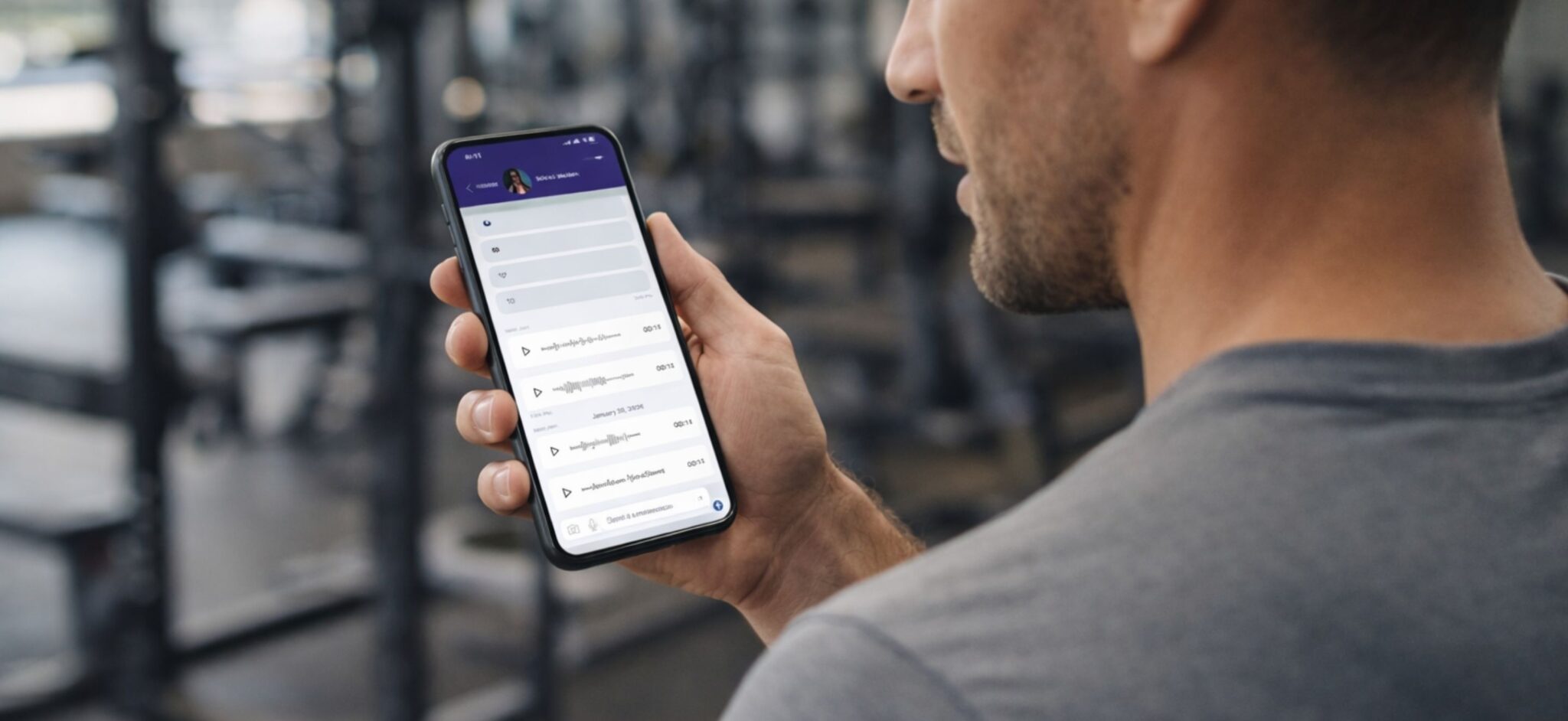
With Voice Notes in TrueCoach, you can:
- Record directly inside the app
- Attach messages to workouts or check-ins
- Keep communication centralized
- Maintain context alongside programming and tracking
That means you’re not jumping between messaging apps or losing conversations in different platforms.
Everything stays connected to the client’s program and progress.
If you want to see exactly how it works, you can learn more about the Voice Notes feature here
When programming, tracking, and communication all live in one place, voice becomes part of your workflow — not an extra task.
When Voice Notes Make the Biggest Impact
Voice notes are especially valuable if you:
- Manage a growing client roster
- Want to improve retention
- Find yourself typing repetitive explanations
- Want to increase perceived personalization without adding hours
They allow you to scale connection, not just programming.
And that’s what modern online coaching requires.
The Bottom Line
Voice messaging isn’t about doing more. It’s about communicating better. It’s about saving time while increasing clarity. It’s about improving connection without increasing complexity.
For online and hybrid coaches looking to elevate the client experience, Voice Notes inside TrueCoach are a simple but powerful upgrade. Try it with your next check-in. Keep it short. Keep it structured. Keep it human.
Sign-Up for Our Newsletter